
Table of Contents
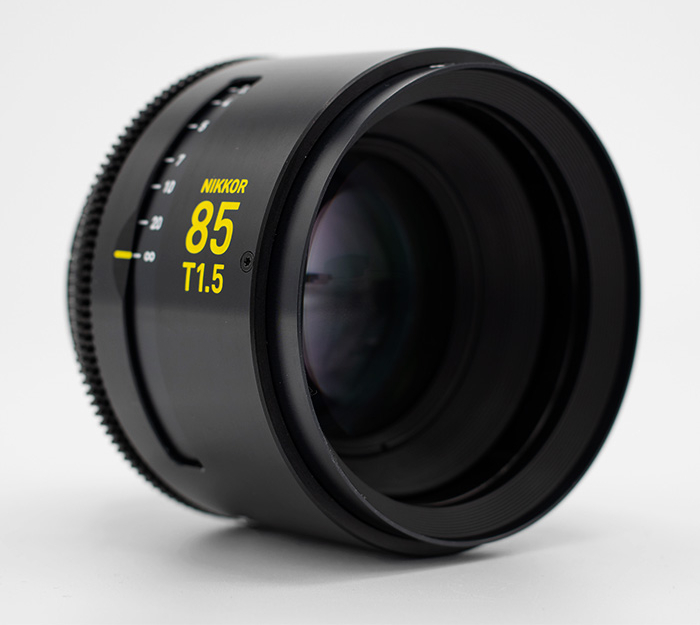
Whitepoint Nikon AI-s 85mm T1.5
Summary
Nikon Nikkor lenses perform flawlessly shooting directly towards light. They are sharp, but with less micro contrast than the Leica R lens, for example. Highlights have a beautiful slight glow. In 1977 Nikon introduced a new system for coupling the lens to the camera’s exposure system. This new coupling system was called Automatic maximum aperture indexing or AI for short. The AI-S lens was created in 1982 when the aperture mechanism of the AI lens was enhanced to feature automatic aperture control. The big difference between AI and AI-S is that the relationship between how much the camera moves the little lever that closes the aperture and how far the aperture closes is now standardized.
Tech Specs
| Manufacturer | Whitepoint |
| Series | Nikon |
| Model | AI-s |
| Focal Length | 85mm |
| Max Aperture | T1.5 |
| Min Aperture | T16 |
| Format | - |
| Image Circle | ⌀ |
| Minimum Focus | 2ft 4in |
| Focus Rotation | 280-300° |
| Iris Blades | - |
| Optical Design | - |
| Squeeze | - |
| Front Diameter | 95mm |
| Filter Thread | - |
| Focus/Zoom Rod | - |
| Native Mount | PL, LPL, EF |
| Data Protocol | - |
| Length | - |
| Weight | - |
| Body Telescope | - |
| Body Material | - |
| Focus Drive | - |
| Iris Drive | - |
| Zoom Drive | - |
History
Country of Origin: -
Release Date: -
Launch Price: -
Design Revisions: